

Market research
Is Now a Good Time to Buy a House? What Australia's Property Paralysis Tells You
TL;DR: Australia has hit pause. Westpac's Home Ownership Report (14 October 2026) found three in four Australians surveyed are holding off until prices fall further, and Cotality has 97 per cent of capital city suburbs down over three months. But a stalled market is when vendors negotiate and competition thins. Whether now is a good time comes down to where you buy and the price you get in at.
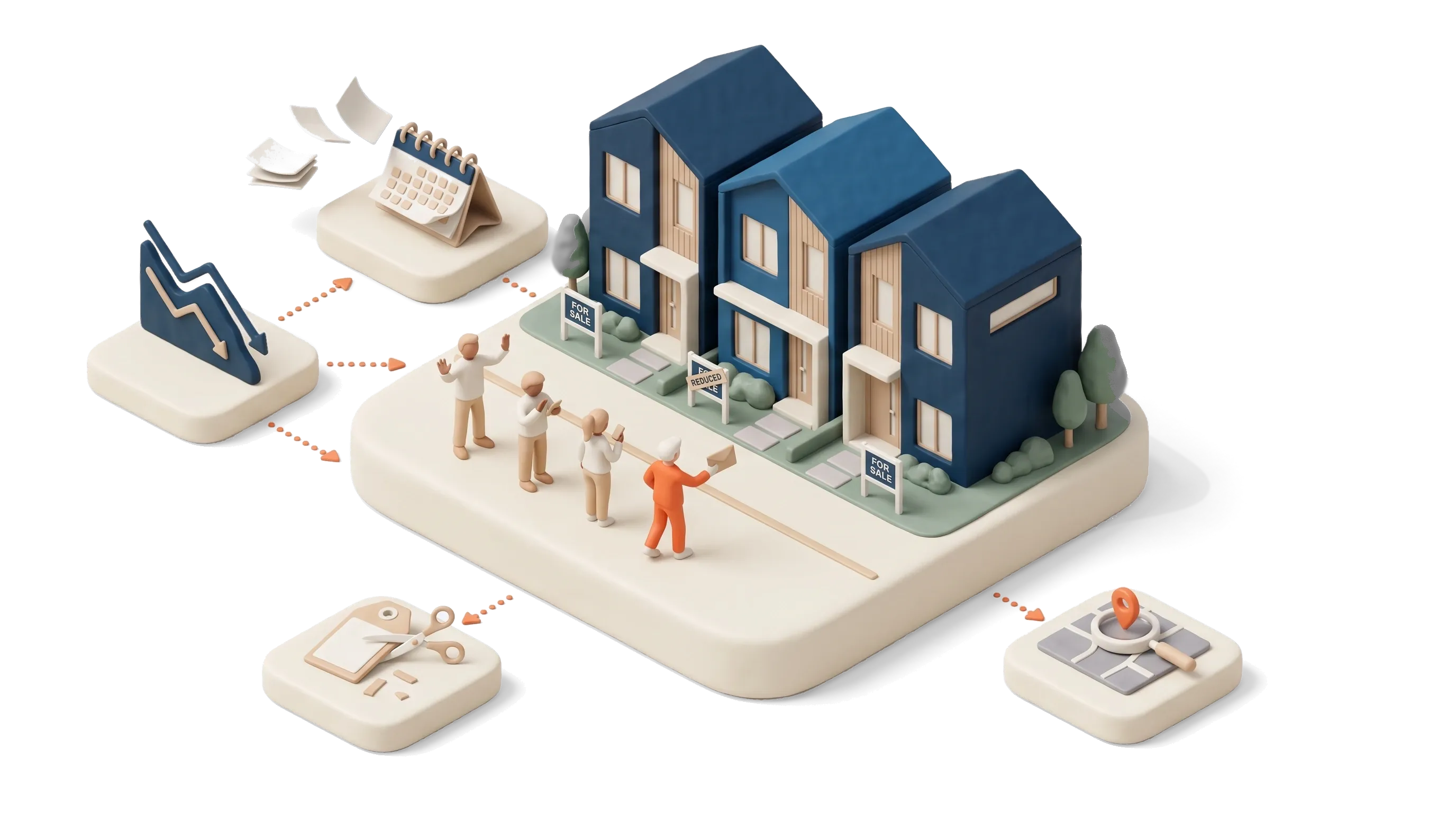

Is now a good time to buy a house, or is the smart move to sit tight until the falls stop?
Do you know what the people sitting tight are quietly handing to the people who aren’t?
And what if waiting for the bottom is exactly the plan everyone else has too?
Ahead: what Westpac’s newest survey says Australians are afraid of, the Cotality numbers behind the fear, what a stalled market hands a buyer who keeps their nerve, the trap in waiting for the bottom, the two lenses that matter more than the calendar, and three questions to settle it for yourself.
This is commentary, not a forecast. The framework behind it lives in where and when to buy or sell residential property.
Is now a good time to buy a house? Australia has hit pause
Westpac has a name for the mood, and it isn’t a cheerful one. Its Home Ownership Report, released on 14 October 2026, calls it property paralysis. Lonergan Research surveyed 1,165 Australians aged 18 and over between 18 and 28 September, and the answers read like a country holding its breath.
| What Australians told Westpac (September 2026) | Share |
|---|---|
| Now is a bad time to buy a first home | 41% |
| Now is a bad time to sell a property | 47% |
| Holding off on buying until prices fall more | 75% |
| Delaying a purchase until interest rates stabilise | 73% |
| Owning property is still the best way to build wealth | 81% |
| First-home buyers more motivated to buy than 12 months ago | 79% |
Three in four of those surveyed are waiting for prices to fall further before they buy. Asked what is driving their decisions, they named housing affordability (40 per cent), interest rate uncertainty (32 per cent) and falling property prices (30 per cent). Westpac’s Chief Executive, Consumer, Carolyn McCann, summed it up carefully: “We’re not seeing a mood of crisis, rather a mood of concern.”
Now read the bottom two rows again. Four in five still believe property is the best way to build wealth, and four in five first-home buyers feel more motivated to buy than they did a year ago. Scared of the market, and keener than ever to be in it. That is not a contradiction. It is a lot of people who want in and are waiting for someone to tell them it’s safe.
House prices falling across Australia: six months and counting
The fear isn’t imagined. The Cotality Home Value Index, released on 1 October 2026, has national values down 1.1 per cent in September, the sixth monthly fall in a row. Values now sit 5.2 per cent below the March 2026 peak, up from 3.6 per cent below it a month earlier, and they are flat (0.0 per cent) over twelve months.
Every capital except Darwin fell. Brisbane dropped 1.5 per cent, edging past Sydney’s 1.4 per cent, and Melbourne eased 0.7 per cent. Darwin rose 0.4 per cent, on its own.
The figure that explains the mood is the breadth. Cotality’s research director Tim Lawless: “97% of capital city suburbs were down in value over the three months to end of September.” Not the expensive end of Sydney. Nearly everywhere in the capitals, at once.
So when three in four people tell Westpac they’re waiting, they aren’t being dramatic. They are reading the same numbers you are. The question is what those numbers look like from your suburb, rather than from the national average.
Greedy when others are fearful: what a stalled market hands the buyer
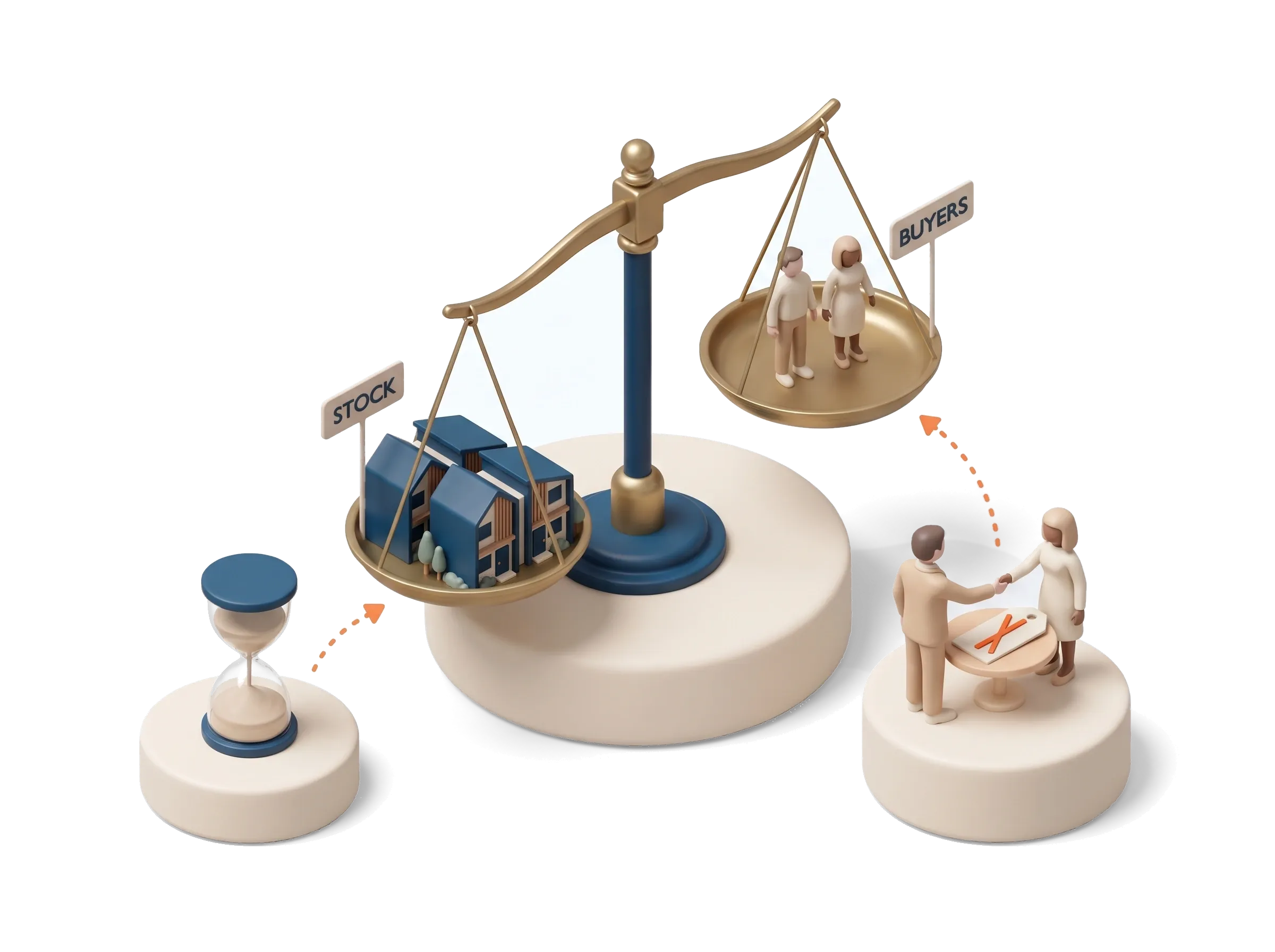
In October 2008, with the share market in free fall, Warren Buffett wrote in The New York Times: “A simple rule dictates my buying: Be fearful when others are greedy, and be greedy when others are fearful.” It wasn’t a new idea for him. He had first set it down in his 1986 letter to Berkshire Hathaway shareholders.
This market is the second half of that sentence. Buffett was talking about shares, and property is slower and lumpier: you can’t sell a bathroom on a Tuesday afternoon. But the human part is the same, and right now the human part is fear.
Here is what that fear does on the ground. These are three of the nine signals Boomscore reads for every suburb, stock on market, market absorption rate and days on market, as measured by Cotality and Boomscore for September:
| Cotality and Boomscore, September 2026 | Now | Against a year ago |
|---|---|---|
| Stock on market: total listings (capitals) | Up 23.1% | More choice |
| New listings added (capitals) | Down 9.2% | Not a rush of sellers |
| Sales over the past three months (national) | Down 19.1% | Fewer competing buyers |
| Days on market: median time to sell | 39 days | 23 days a year ago |
Read those together. Fewer homes are coming on, yet there are nearly a quarter more to choose from, because they aren’t selling. Sales are down by almost a fifth while stock climbs, which in Boomscore’s terms means the market absorption rate is falling: homes are selling more slowly than they are piling up. And the typical home now sits for 39 days instead of 23.
A vendor on day 39 takes calls they wouldn’t have taken on day 10. Fewer people turn up to compete with you. Finance and building-and-pest conditions that would have lost you the property a year ago get accepted. That is leverage, and it belongs to whoever is still in the market.
Some buyers have noticed. In the same Westpac survey, 19 per cent see an opportunity to make lower offers, 17 per cent are revising their deposit target, and 16 per cent are now considering suburbs that used to be outside their budget. They are reading the same headlines as everyone else and doing the opposite of freezing.
One honest caveat. Greedy doesn’t mean reckless. Buying when others are scared only works when what you buy is sound and the price makes sense on its own numbers, not on a hope that the market will bail you out.
Should I wait for house prices to fall? The trap in waiting
Waiting feels like the safe choice. It has three problems.
Nobody rings a bell at the bottom. An index reports what has already happened. By the time the monthly figure confirms a turn, the vendors who were taking calls on day 39 have usually stopped taking them. The bottom is something you see in the rear-view mirror.
Everyone is waiting for the same signal. If 75 per cent of the people Westpac asked are holding off for the same thing, then the day they all decide it has arrived, they arrive together. The competition you’re avoiding now is the competition you’d be walking back into.
The rules change on 1 July 2027. The May 2026 budget changed two things for property investors, both from that date. Negative gearing on established homes is being wound back and narrowed to brand-new homes, and the 50 per cent capital gains discount is being replaced with an indexed cost base and a 30 per cent floor. That shifts the maths of what you buy, not only when. Our guide to the 2027 negative gearing and CGT changes walks through it.
Westpac’s McCann put the case against waiting plainly: “waiting for the perfect moment can mean missing opportunities that are right in front of you.” A bank that writes mortgages would say that, of course. It doesn’t make it wrong.
None of this means buy anything, anywhere, today. It means the calendar is the wrong thing to be staring at. Two other things decide whether a purchase works, and neither of them is in the national headline.
Two lenses: where you buy and the price you get in at
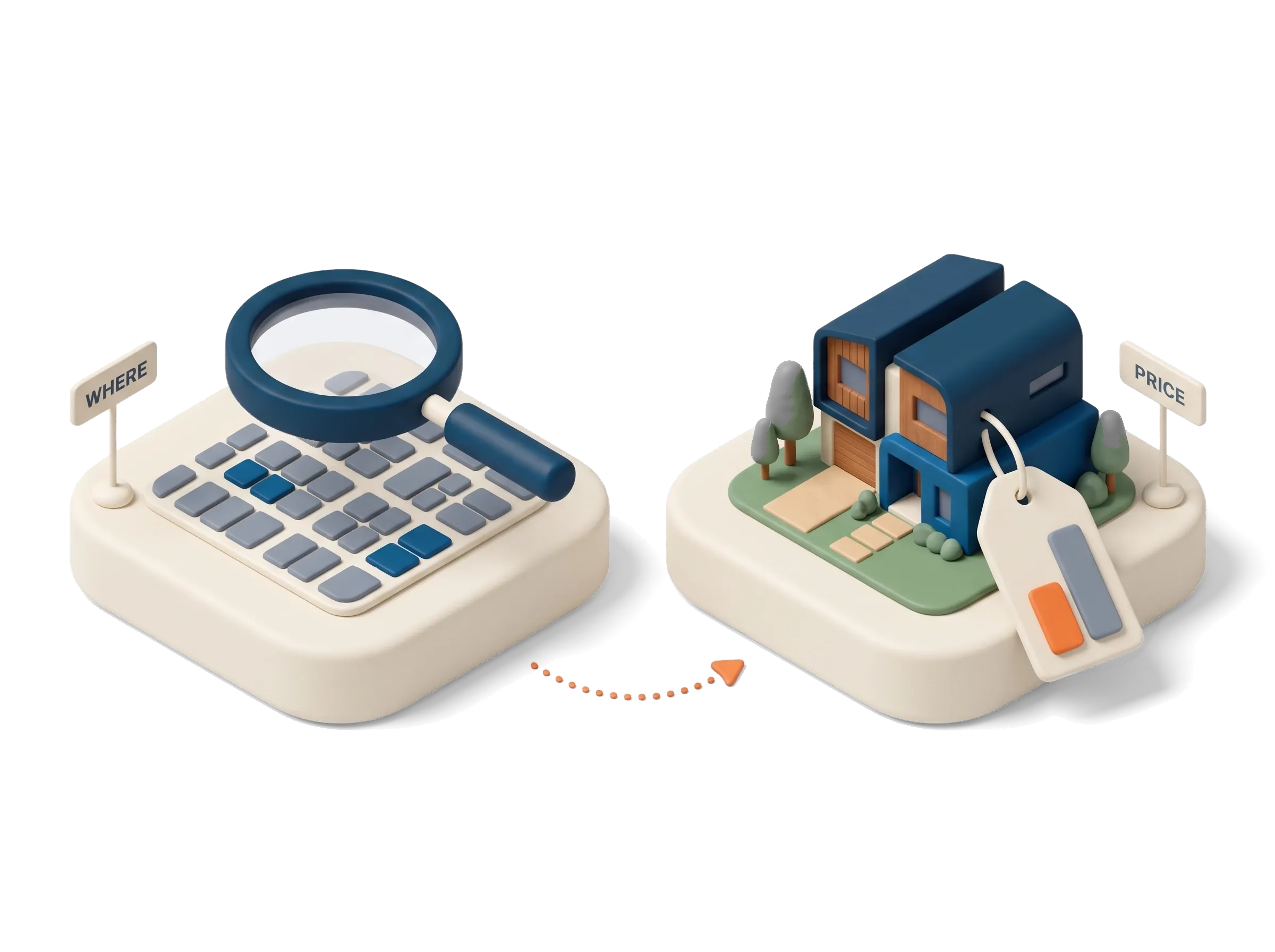
Lens one: where. “The Australian property market” is an average of thousands of local markets, and they never move as one. Even with 97 per cent of capital city suburbs down over three months, some are only softening, and in some demand is still holding up against the homes for sale. A national average tells you nothing about which kind of suburb you’re looking at.
That is the job Boomscore was built for. It began in 2010 as the DSR Score, became the Boomtown app, and has been Boomscore since 2022. It scores more than 15,000 suburbs out of 100, houses and units separately, on buyer demand against supply, and all nine of its signals make up the score: days on market, vendor discount, auction clearance rate, gross rental yield, stock on market, online search interest, vacancy rate, proportion of renters and market absorption rate. It shows where demand still outruns supply and where vendors are discounting. It can only ever identify potential, not promise growth.
It has been tested in a falling market before. From 2010 to 2013, after the GFC, the market fell 1.7 per cent (Residex) while Boomscore’s Top 100 grew 11.85 per cent, against 7.3 per cent for API magazine’s Top 100. And from January 2014 to January 2016, the Top 50 my daughter Olivia picked in Hotspot Finder, aged six, grew 40.97 per cent for houses, against 33.30 per cent for Smart Property Investment’s expert panel and 12.33 per cent nationally, independently audited. The detail is on Boomscore’s proof it works page. Past performance is not a reliable indicator of future performance. Our walkthrough on reading Boomscore data shows how to use it as a shortlist rather than a verdict.
Lens two: the price you get in at. Every brand-new property has two prices. The retail price is what a buyer off the plan pays, and inside it sit the developer’s margin, the marketing, the display suite and the sales commissions. The developer cost price is land, build and the costs of delivery, without the retail layer on top. In a rising market the gap between the two is a nice bonus. In a market like this one, it’s the buffer that’s already in the price on day one, rather than one you’re waiting for the cycle to deliver.
And after 1 July 2027, brand new is also where negative gearing still applies. If buying brand new at developer cost price is the part you want to understand properly, join the free FracHaus community and we’ll walk you through how the two prices work.
Three questions that decide it for you
Whether now is a good time to buy comes down to your situation, not the mood of the nation. These three cut through it:
- Does it work at today’s prices and today’s interest rates, without counting on growth? If the purchase only makes sense once the market recovers, the market is making the decision for you.
- Do you know what your suburb is doing, rather than the national average? Demand, days on market and vendor discounting, for the actual suburb and dwelling type you’re considering.
- What price are you getting in at? Against what comparable homes sell for, and against what the property is worth on completion. The gap between those numbers is your margin for error.
Westpac found a country that is scared of the property market and still wants in. Both feelings are reasonable. Neither one tells you what your suburb is doing or what you’re paying, and those are the two things you can actually check. Hoping is not a strategy. Checking is. If you’re also weighing a sale, buy, hold or sell covers the other side of the decision.
More reads: the Australian property market downturn of 2026, reconciled · what the 2027 negative gearing rules count as a new build · the pillar hub: where and when to buy or sell residential property.
General information only. Nothing here is financial, credit or tax advice, nor an offer of any financial product, and market commentary is not a forecast. Past performance is not a reliable indicator of future performance. Speak with your own licensed adviser before acting.
Frequently asked questions
What did the Westpac Home Ownership Report find in October 2026?
Westpac's Home Ownership Report, released on 14 October 2026, surveyed 1,165 Australians aged 18 and over through Lonergan Research between 18 and 28 September 2026. It found 41 per cent think now is a bad time to buy a first home and 47 per cent think it is a bad time to sell. Three in four (75 per cent) of those surveyed are holding off on buying until prices fall further, and 73 per cent until interest rates stabilise. Yet 81 per cent still agree property is the best way to build wealth, and 79 per cent of first-home buyers feel more motivated to buy than they did a year ago.
What did Cotality's Home Value Index show for September 2026?
Cotality's national Home Value Index fell 1.1 per cent in September 2026, the sixth monthly fall in a row, leaving values 5.2 per cent below the March 2026 peak and flat over twelve months. Brisbane fell 1.5 per cent and Sydney 1.4 per cent for the month, and Darwin was the only capital to rise. Cotality's research director Tim Lawless said 97 per cent of capital city suburbs were down in value over the three months to the end of September.
What does 'be greedy when others are fearful' mean for a property buyer?
The line is Warren Buffett's. In his October 2008 New York Times op-ed he wrote: 'A simple rule dictates my buying: Be fearful when others are greedy, and be greedy when others are fearful.' He first set the rule down in his 1986 letter to Berkshire Hathaway shareholders. For a property buyer it means a market most people are avoiding is often the one where vendors negotiate and fewer buyers compete. It does not mean buying anything: the property still has to suit you and the price still has to make sense on its own numbers.
Can Boomscore tell me which suburbs will grow?
No, and no data tool honestly can. Boomscore scores more than 15,000 Australian suburbs out of 100 on buyer demand against the homes for sale, reading nine signals such as days on market, vendor discount and vacancy. It shows where demand is holding up or softening today. In its founder's words, it can only ever identify potential, and its past results are not a reliable indicator of future performance.
Sources
- Property paralysis: Australians pause property plans amid market uncertainty — Westpac, accessed October 2026
- Australian housing values down for sixth straight month in September — Cotality, accessed October 2026
- Chairman's letter to shareholders, 1986 — Berkshire Hathaway, accessed October 2026
- Proof it works — Boomscore, accessed October 2026