The market decides your rent and
capital growth. Informed investors manufacture theirs.
For most investors the plan was simple: buy an established home, gear the loss against
your salary, and wait for the cycle to hand you the next deposit. From July 2027 that
deduction goes, and so does the 50% capital gains discount. Brand new homes are
the exception on both counts. Co-develop one for a cash return, or keep it at the
developer's cost price with the equity already in it.
Ordinary property investing asks you to wait and hope.
You buy at retail
You pay the full market price, then need the market to rise before you are ahead. The developer's margin went to someone else.
You wait on the cycle
Capital growth depends on forces you don't control: rates, sentiment, supply. It can take years, or go sideways.
You carry it alone
A seven-figure mortgage, all the risk on one asset, and holding costs eating the yield while you wait.
Before you read another word
Is property really finished? Test your instincts.
Seven quick steps. Make a guess at each one, and we'll show you the real number.
the dual lens methodStep 1 of 7
Everyone agrees on one thing
“The May budget killed property investing.”
One question before you believe them.
Which home did that budget just make more attractive to an investor?
Negative gearing wasn't abolished. It was narrowed to brand new.
From 1 July 2027 an established home loses the deduction and a new build keeps it. The market really is grim, mind you: five monthly falls, and 93% of capital city suburbs going backwards. Hold that thought.
So everyone should just buy brand new?
Here's the catch they're all worried about.
A brand new home has a retail price. How much of that price do you think actually builds the home?
Your guess · 95%
About 20%Margin, selling costs, and optimism. None of it is bricks.
About 80%The home itself: land, approvals, build and delivery.
Somewhere between 75% and 85%, depending on the project. The rest never touches the house.
New builds aren't overpriced. Retail is.
Lens one · the price
Two buyers. Same townhouse, same project. Both signed at $465,000.
One of them settled at a different price. What do you think our investor paid?
$300,000$350,000$400,000$450,000$500,000
Your guess$440,000
Contract$465,000
Settled$384,500
Valued$475,000
$90,500 below the bank's valuation
She came in on the development side, so her share of the developer's profit came off before a retail price existed. Not a discount. A deduction.
The bank valued it at $475,000.
That's 21.7% equity the day she got the keys, and a 6.63% yield on what she paid against 5.36% at retail.
The value didn't catch up to the price. It moved ahead of it.
The catch: you have to be in before the margin exists, while the project is still work rather than a finished home. The discount is the reward for carrying development risk, and a project can go the other way.
Lens two · the growth
Remember the grim numbers? Most suburbs really are going backwards.
Find one that isn't. Tap a suburb to check it.
Nothing checked yet
That's the job Boomscore does across about 15,000 suburbs, in seconds rather than guesses. Days on market falling. Vacancy tight. Stock coming off. It reads the trend, not the headline.
There's always a pocket.
A national headline averages every suburb, so it describes almost nowhere in particular. You don't buy the average. You buy one street.
Both lenses, on one house
Your turn. Change what you pay, and where you buy.
What you pay
Where you buy
Wait and hope.
You start at zero and wait on a market that isn't moving. It's the reason most portfolios stop at one.
Illustrative shapes, not a forecast. The two lines that climb are the same shape: the location does its work whatever you paid.
Not a hypothetical · one completed project
Sapphire Place, Palm Beach. Where our investor started, mid 2010s:
$384,500Paid at the developer's cost price
$490A week in rent
21.7%Equity on the day of the keys, built by the project rather than the market
$1.1mAbout what it's valued at, September 2026
$1,100About that a week in rent. More than double.
"The property was positively geared from the outset with great depreciation ever since. These have been the best investments I've made, with continued growth even during the housing market downturn."
The 21.7% was built by the project. The decade since is organic capital growth, which the retail buyers next door got too, because the suburb was picked on data. The home has since been sold, so these show what holding on would be worth today, not what it sold for. Every figure is on the case study. Go and check it.
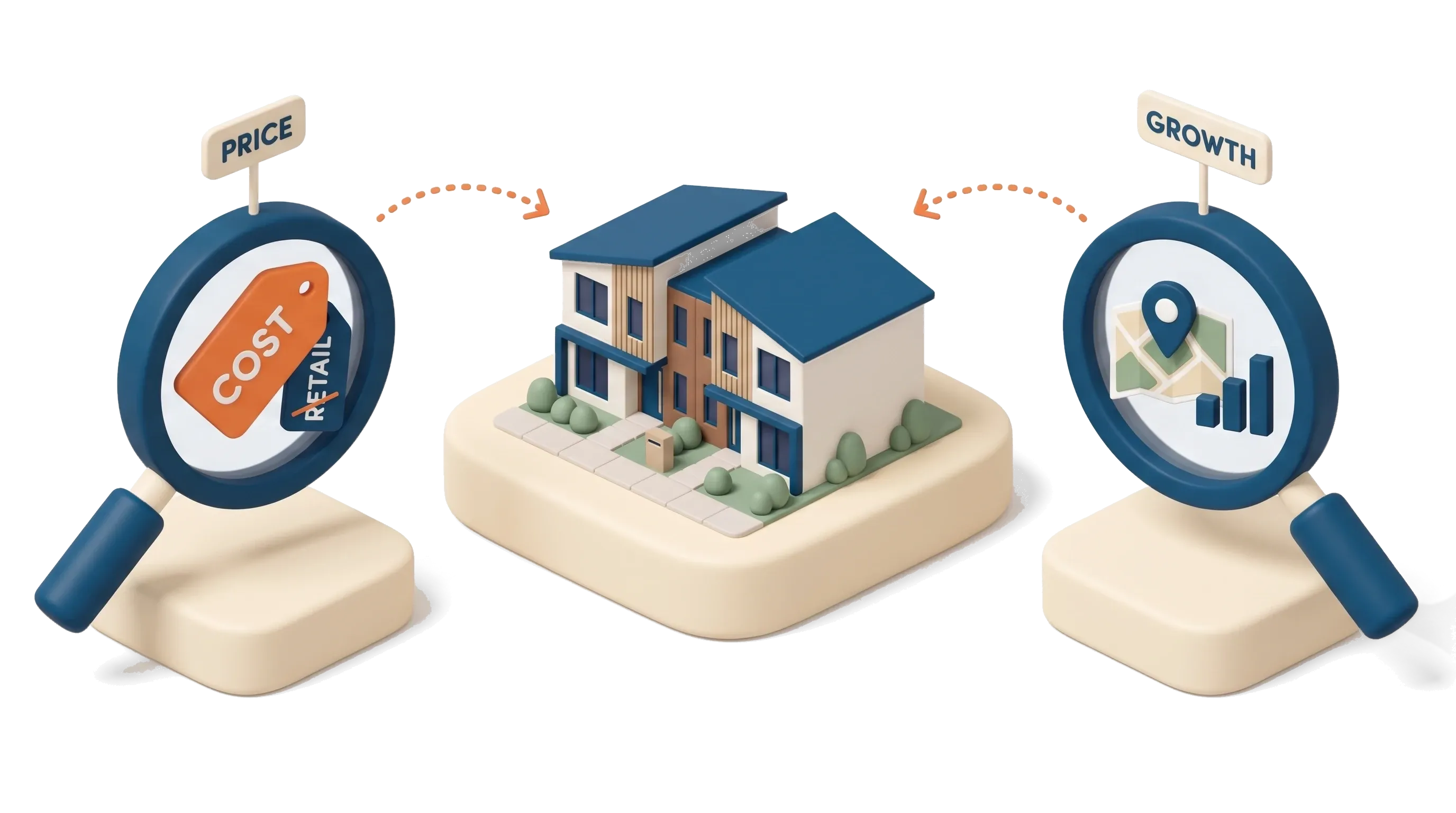
The dual lens method
One lens decides what you pay. One decides what happens after.
It's free, and there are no offers by email, ever.
General information only. Not an offer of any investment, and not personal advice. Sapphire Place is one completed project delivered by our team's earlier development business, and past results are not a reliable indicator of future results. The chart on step 5 is illustrative.
What changed in May
Brand new is now the only home you can negatively gear. That isn't the trap it sounds like.
From 1 July 2027, negative gearing on established homes is wound back and the 50%
capital gains discount is replaced with an indexed cost base. Negative gearing has not
been abolished. It has been narrowed to brand new homes, the ones that add to supply.
So the tax system is pointing investors at new builds, and most people's first reaction
to that is a fair one.
You pay top dollar off the plan, and then you wait years for the value to catch up.
The objection we hear most
At retail, often true. A retail price carries the developer's margin, the marketing, the
display suite, the sales commissions, and a little optimism about what the place will be
worth once it's finished. None of that is bricks.
New builds are not overpriced. Retail is.
Take that out at the source and the same house is a different investment. That's the
first of the two lenses we look through before a project goes ahead.
~5%Selling costs: agents, commissions, the glossy brochures
~15%The developer's margin, and the optimism about what it'll be worth
~80%The cost to actually create the home: land, approvals, build, delivery
Where a retail price goes. The top fifth never touches the house. Illustrative and
general to the market, and the dollar version is in
chapter one of the guide.
The dual lens method
Two lenses. One decides what you pay. One decides what happens after.
Every property decision comes down to two questions. We look through both before we commit
a dollar.
01
The price lens
What you pay
Every brand new home has two prices. Come in on the development side and the margin,
usually around 20 per cent, comes off before retail exists: equity the
day you get the keys, and a better yield for as long as you own it.
A national headline averages about 15,000 suburbs, so it describes almost
nowhere. Boomscore, our sister research platform, reads supply and demand
suburb by suburb, and the trend in each. If the data doesn't back a location, we don't
build there.
A tight location lifts rents and values whatever you paid. A cost price protects you wherever
you bought. The price lens gives you the head start. The growth lens is what
compounds it.
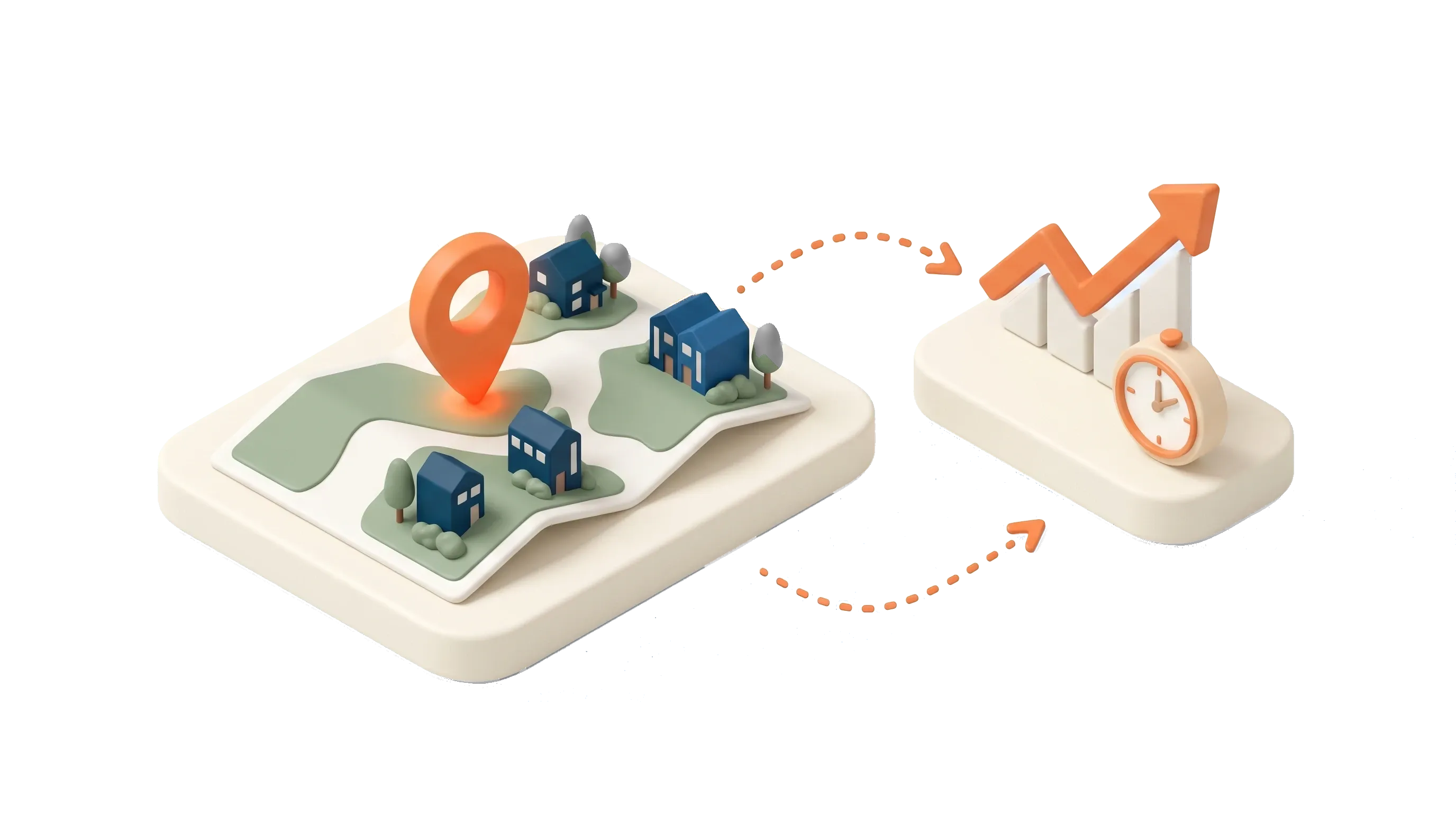
The four outcomes of price and location combined
A pocket the data supports
An average suburb
Developer's cost price
Cost price, good pocketBoth lensesEquity on the day you settle, and organic capital growth on top of it.
Cost price, average suburbA risky oneYou start in front, and then not a lot happens.
Retail price
Retail price, good pocketA slow resultThe growth turns up, but you paid the margin to get there.
Retail price, average suburbWait and hopeThe usual outcome, and the reason most portfolios stop at one.
The right suburb at the wrong price is a slow result. The right price in the wrong suburb is
a risky one. You want both.
Two paths, one idea
Put the developer's advantage on your side of the table.
Both paths capture value at the point where property is actually created, not years later when the market catches up.
A finished home that settled 21.7% under valuation.
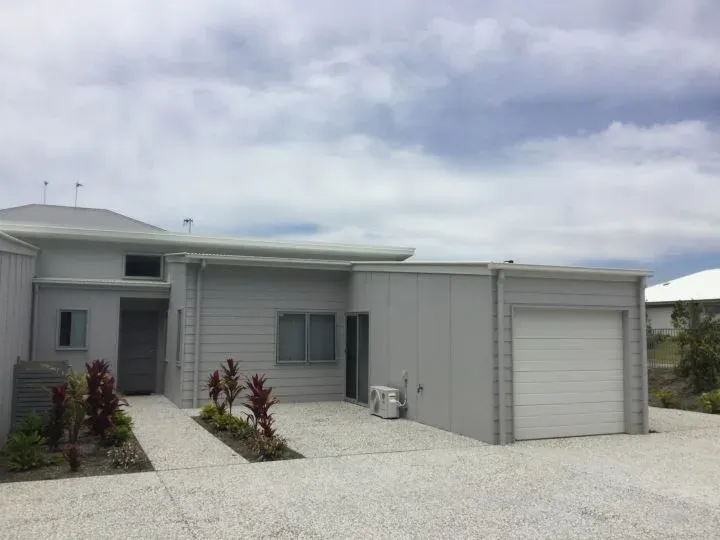
Sapphire Place at Palm Beach on the Gold Coast: five completed townhouses. One investor
kept a home at developer cost price instead of selling for cash. We publish the 2015
projection beside the 2016 settlement, because a number you can check is worth more than
one you cannot.
21.7%Manufactured equity, beating the 20% benchmark
“I have a sound understanding of the figures a development can and should achieve, and I know most first-time developers do not maximise their returns. I am also time poor. This is a strategy I could not pull off on my own right now.”
We explain the model up front, so our conversations can be about the projects.
Start with how it works, then go as deep as you like on the parts that matter to you. The basics are all here, so when you do get in touch, the time goes on what you're after.


 the dual lens method