

Sapphire Place, Palm Beach, Gold Coast: 21.7% under valuation on settlement day
Five townhouses on the Gold Coast, completed by our team's earlier development business. One investor kept a home instead of selling it, and settled at the developer's cost price. These are the figures our investors settled on, not a projection of anyone's future.
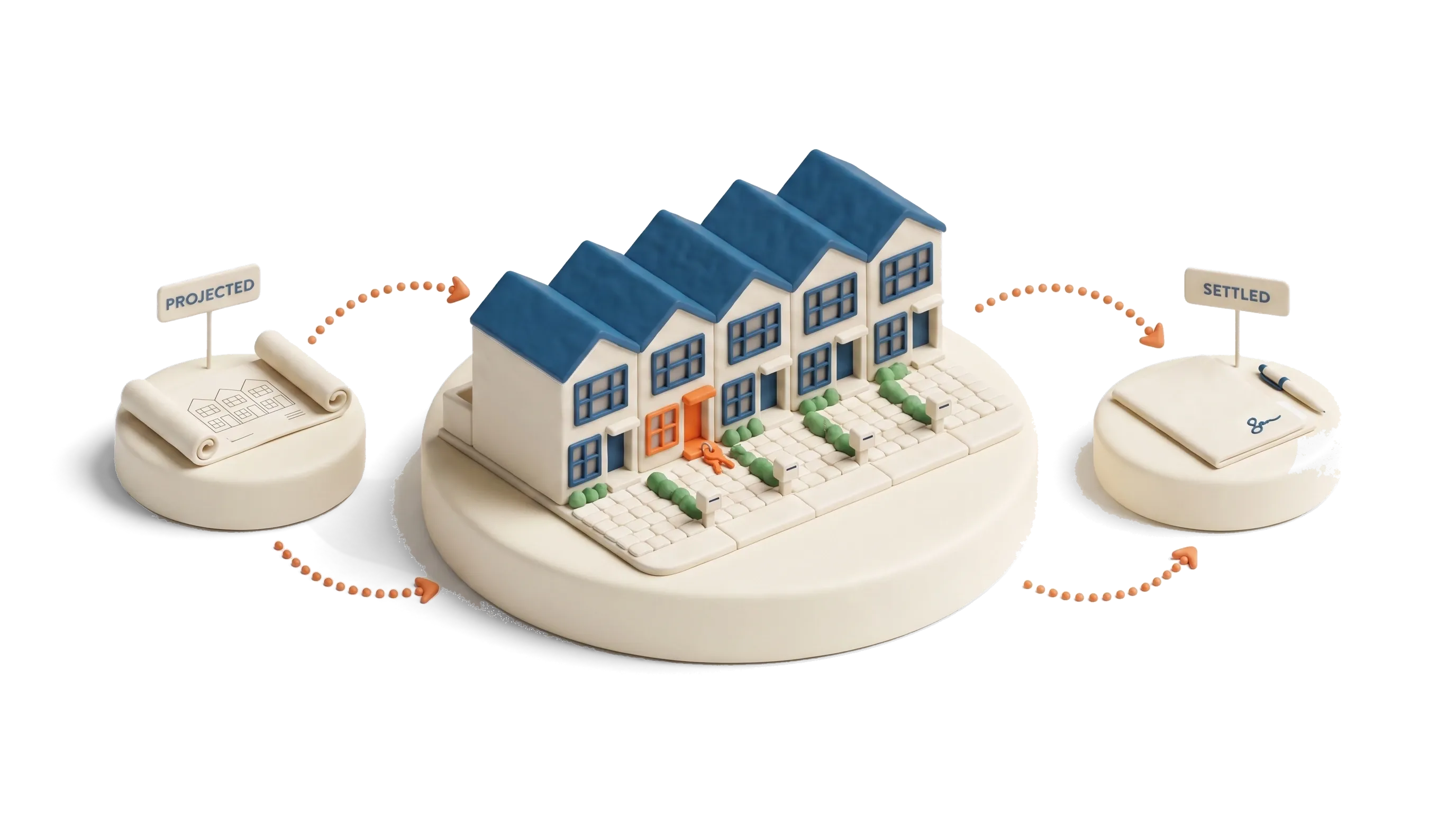
The 2015 projection, and the 2016 settlement
This is the comparison worth publishing, and it is the one almost nobody in this industry will show you. The left column is what the offer document projected before a brick was laid. The right column is what actually settled. Nothing here is modelled.
| Projected, 2015 | Actual, 2016 | |
|---|---|---|
| Market value / bank valuation | $475,000 | $475,000 |
| Developer's cost price | $380,000 | $384,500 |
| Discount against market value | $95,000 | $90,500 |
| Weekly rent | $450 | $490 |
| Gross yield on cost | 6.2% | 6.63% |
| Cash-on-cash return on $160,000 | 59% | 57% |
| Build time | 12 months | 11 months |
Read it honestly and it says two things.
$90,500 against $95,000 projected
The council required a few minor changes during the build, so the discount came in a little short of what the offer document had modelled.

$490 a week, against $450 projected
The location research did this, and it is the half of the result the discount cannot deliver on its own.
Same house, same rent, two very different returns
This is the part investors tend to miss. A yield is rent divided by what you paid, so two people can own identical townhouses, collect identical rent, and be in completely different investments. The tenant does not know or care what you paid. The yield does.

$475,000
paid at retail
5.36%
on the same $490 a week, with no equity in hand on settlement day.
$384,500
paid at cost
6.63%
on the same $490 a week, and $90,500 of equity already in the asset.
That gap is the entire argument for buying at developer cost price. It also explains why a brand new home can look like a poor yield at retail and a strong one at cost. The building is identical. Only the number underneath it moved.
Nobody negotiated this. Our investors took a different position in the deal.
A discount that size is not a bargain someone talked their way into, and treating it as one is how people talk themselves out of understanding it. A retail price carries the developer's margin, the marketing and the selling costs. An investor who commits capital before a brick is laid carries risk a retail buyer never touches, and acquires at the cost of creating the home instead of the price of buying a finished one.
- Seed capital, committed early. Their $160,000 went in at the front of the project, when the outcome was still work rather than a finished home with a price on it.
- Committed outcomes for the lender. Investors taking dwellings gave the project the pre-commitment a senior lender wants before it funds construction.
- Development risk, genuinely carried. Approvals, build cost and delivery all sat in front of them. That risk is what the discount pays for.
- The research came first. Elanora's vacancy rate was running at 0.63% against a Queensland average of 2.5%, and its BoomScore had climbed from 27 to 32 in under twelve months. That pointed to a home that would let easily, and it did: the first open drew around 25 groups through.
That last point is the one we would underline. The discount is the reward for taking development risk. The research is what made the demand a reasonable expectation rather than a hope, and it is the same where and when to buy or sell data that picks our sites today.

The deposit was already in the house
Here is the part that changes what an investor can do next, and it is easier to see than to explain. A lender will typically write a loan up to 80% of what a property is worth. Sapphire Place was valued at $475,000. Eighty per cent of $475,000 is $380,000, and the all-in cost was $390,015, so a standard loan against the valuation would have covered all but about $10,000 of it.
Practically, that means next to no deposit to find. The deposit was already sitting inside the house as manufactured equity, because the valuation was higher than the cost. That is the difference between buying at cost and buying at retail, and it is why the capital put in at the start does not have to stay parked in the property.
Our investors did not actually borrow that much. Their development loan was $230,015 on top of the $160,000 they contributed, leaving a final 46% LVR against the valuation, and the townhouse was cash-flow positive from the outset and able to carry its own loan and expenses. The 80% figure below shows what the equity made possible, not what they did.
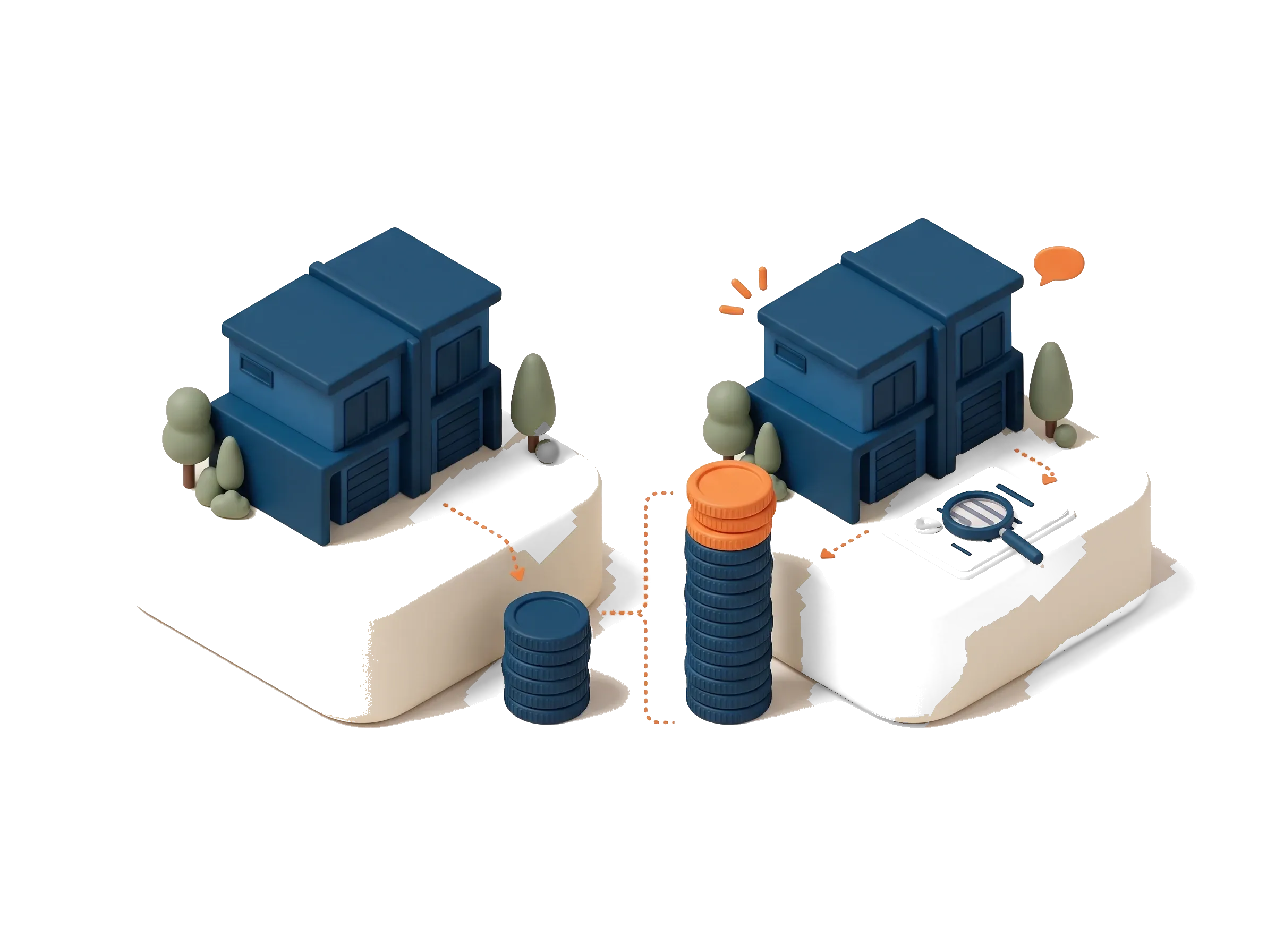
How the capital comes back around
Once the loan carries the purchase, the money our investors committed at the start is free again. That is the whole engine, and it is worth being clear that it is an engine with a governor on it: it runs until a lender says no.
- 1
Capital goes in
Seed capital funds a project before it is built, which is the position that earns the cost price rather than the retail price.
- 2
The build creates the equity
At completion the finished home is worth more than it cost to create. That gap is manufactured equity, and a valuer puts a number on it.
- 3
The equity becomes the deposit
Settling with a loan at 80% of valuation covers the cost price, so no cash deposit is required. Stamp duty and legals are still paid in cash.
- 4
The capital is free again
The original capital is no longer tied up in the purchase, so it can go into the next project, and the property stays, rented, with equity in it.
What has to go right, every single time
The loop above is arithmetic. Whether it turns is a different question, and these are the things that stop it, not footnotes to skim.
- Serviceability is the real ceiling. Equity does not repay a loan, income does. Every new loan needs a lender to agree you can afford the whole portfolio, and that is what ends most recycling plans long before the equity runs out.
- The valuation has to land. The entire mechanism rests on the completion valuation. If it comes in short, the loan shrinks, and the shortfall is cash out of your pocket.
- Cash still leaves on every cycle. Stamp duty, legals, lenders mortgage insurance if the LVR goes higher, and holding costs are all real money, and none of them are covered by equity sitting in the asset.
- Rates and policy move. Lending rules, rates and what a bank will count as income all change, sometimes between one project and the next.
- A project can go the other way. Development carries risk. A build that runs over or a market that turns does not produce equity to recycle.
This section is educational and conceptual. It illustrates a mechanism using one completed project's figures. It is not financial, credit or tax advice, not a forecast, and not a plan for your circumstances. Whether any of it is available or sensible for you depends on your income, your lender and your own advisers.
The rent did the rest
The recycling above only works if the home lets, and lets well. Sapphire Place was appraised at $450 a week and achieved $490, which is what turned a projected 6.2% yield on cost into 6.63%. The section below has the detail.
If you never want a mortgage
None of this applies to the cash pathway, where you take a return instead of a home. There is no loan, no valuation and no recycling: your capital comes back with a share of the profit, and you keep no property. Our keep-a-home investor's own position was a 57% cash-on-cash return, held as equity in an asset rather than paid out as cash.
The data picked the suburb, and the tenants agreed
A yield has two halves, and buying at cost only fixes one of them. The other half is whether the home actually lets, and for how much. Sapphire Place was appraised at $450 a week before completion, and the offer document was built on that number. It achieved $490, about 9% above the appraisal, and that difference is not decoration: at $450 the yield on their cost price would have been 6.2%, and at $490 it was 6.63%.
This is the part the discount cannot do on its own, and it is why the projection above was beaten on the rent even as it was missed slightly on the price. The suburb was chosen on demand data: vacancy at 0.63% against a Queensland average of 2.5, a BoomScore climbing from 27 to 32 in under twelve months, and stock on market falling. At the time, that BoomScore reading of supply against demand was running at 97% accuracy in projecting capital growth. The first open drew around 25 groups through. So our investors bought the home under valuation and bought it somewhere the rent had room to move, which is the combination worth paying attention to.
Appraised at $450. Let at $490.
The appraisal is the professional estimate before a tenant exists. The achieved rent is what the market actually paid. When the second number lands above the first, the demand read was right.
Our investors started 21.7% ahead, and then the market ran
The manufactured equity was the head start, and it arrived on settlement day. Everything after that is the market doing what markets on the southern Gold Coast did, which is worth separating out honestly rather than claiming as our own work.
$384,500
what our investors paid at developer cost price
Valued at $475,000. Rented at $490 a week.
$1.1m
the home's estimated value
Renting at about $1,100 a week, more than double.
- $715,500growth on what our investors paid, nearly three times their cost price
- 14.9%what the September 2026 rent alone would return on the original $384,500
- 2.2xthe rent, from $490 a week to about $1,100
Be clear about which part is which. The 21.7% was manufactured by the development and was there on day one. The decade that followed is organic capital growth, and anyone who bought in that suburb at retail got a version of it too. What buying at cost changed is where our investors started, what the rent returned the whole way through, and the fact that their capital was free to go again instead of sitting in a deposit. The home has since been sold, so the September 2026 figures show what holding on would be worth today, not what it sold for. Past growth is not a forecast, and a different decade could look nothing like this one.
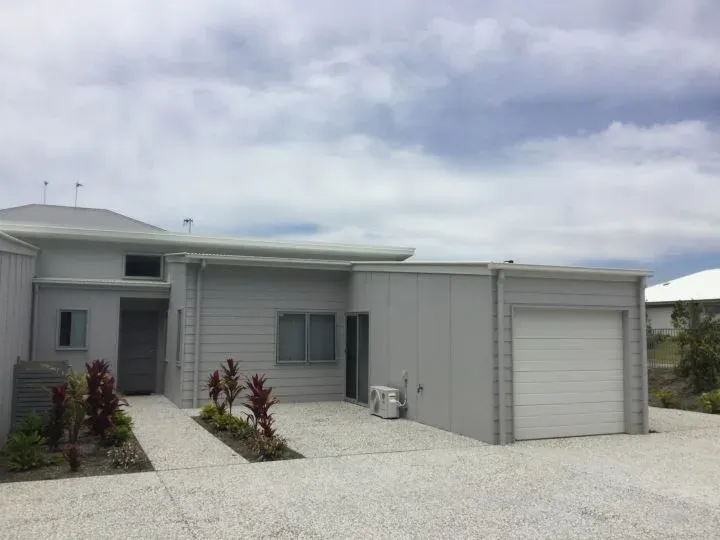
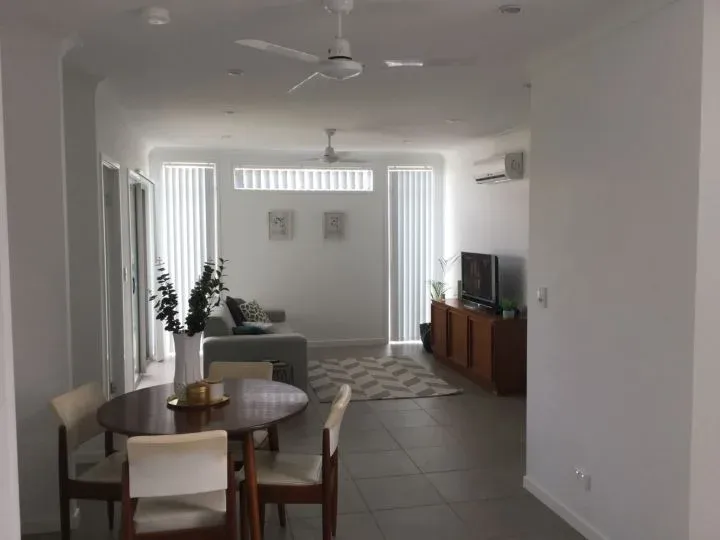
Photographs of the completed home, taken by the development team. For the property as it stands today, including current photography and the sales history, see the listing on realestate.com.au. Images and listing content on that page are copyright realestate.com.au and its licensors, and are not reproduced here.
Why an investor who knows the numbers still chose co-development
She was not a beginner. She is a banker and an SMSF investor who had done the reading, and her reason for co-developing rather than developing had nothing to do with not understanding the maths.
I have a sound understanding of the figures a development can and should achieve, and I know most first-time developers do not maximise their returns. I am also time poor. This is a strategy I could not pull off on my own right now.
 Read her full review
 That is not defeat. That is an investor who understands the game well enough to choose their position on the field.
He paid retail, and still did well
Not everyone wants to fund a development, and not everyone can. Sapphire Place had two ways in: the developer side, which needs a lump sum up front, and the retail side, which is simply buying a finished townhouse the ordinary way. Of the five townhouses, two went to cost-price investors, two were sold at market value, and the developer kept one. Jonathan and Brianna Mansfield took the retail route.
He paid the retail price. He did not get the discount, and this page should not pretend otherwise. What he did get was the part of the work that has nothing to do with the discount: a home in a suburb chosen on demand data, which let easily, rented above its appraisal and kept growing through a downturn that hit plenty of other places.
We purchased as a retail investor and haven't looked back. The property was positively geared from the outset with great depreciation ever since. These have been the best investments I've made, with continued growth even during the housing market downturn.
 Read the full review
 Positively geared from the outset is the line worth sitting with, because it is what a new build at the right entry price in the right suburb is supposed to do, and what most new builds bought at retail in the wrong suburb do not.
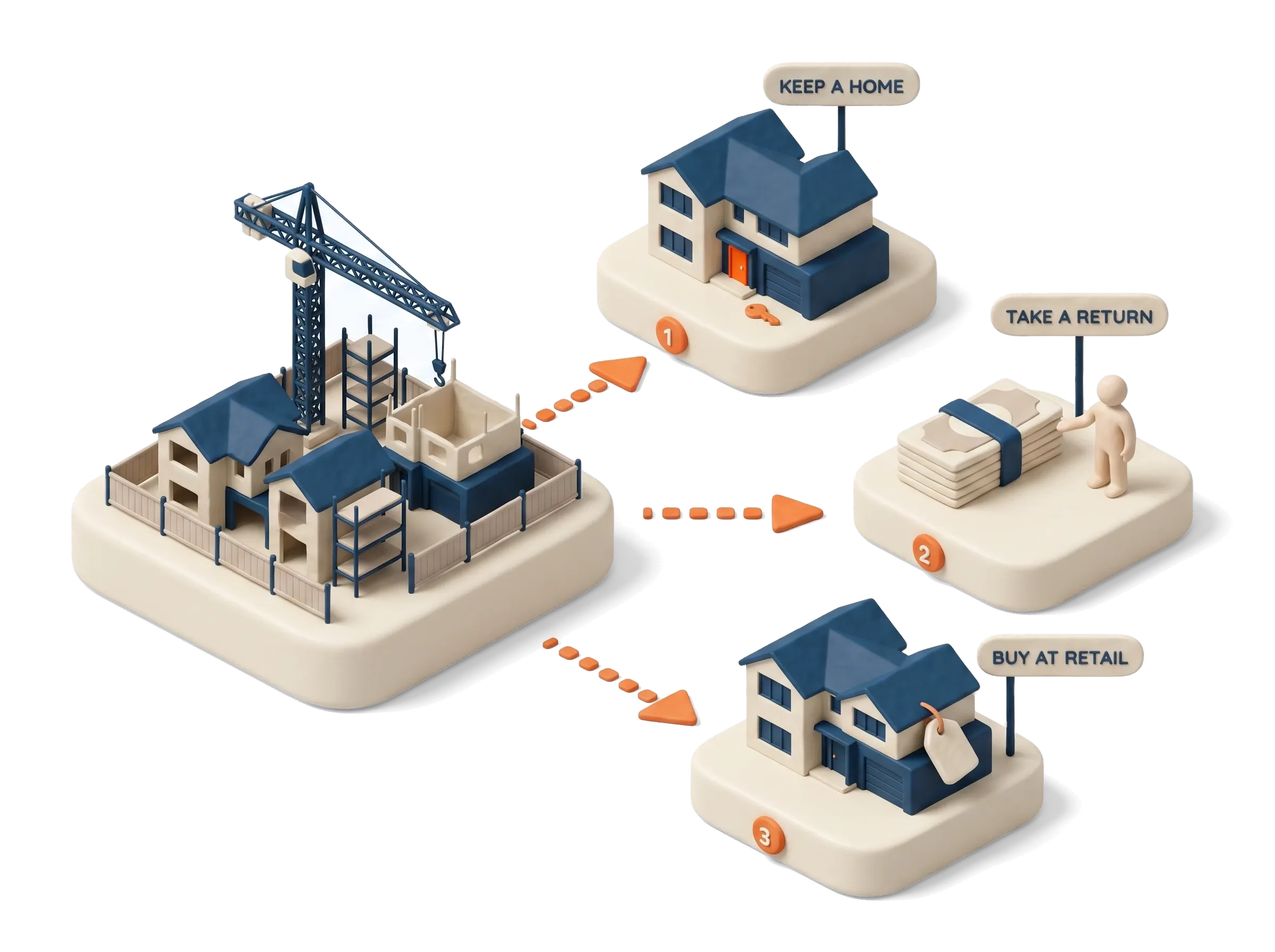
Fund the development, keep a home
The keep-a-home path our investors took. Seed capital in early, settle at developer cost price, and the manufactured equity is yours from day one. A 57% cash-on-cash return on this project.
Fund the development, take a return
Capital in, capital back plus a preferred return at completion. No loan, no property, no recycling. The same development economics, taken as cash instead of as a home.
Buy one at retail
Jonathan's path. An ordinary purchase of a finished townhouse, with the location research doing the work rather than the entry price.
Which of these is open on any given project depends on the project. It is one of the first things we work out when we speak.
What this proves, and what it does not
What it does prove
That manufactured equity is a real, measurable thing rather than a marketing phrase. A valuer put $475,000 on a home that cost $384,500 to create, and the difference sat in the asset from day one. It also shows a projection can be checked against a settlement, which is the test most property marketing quietly avoids. It also shows what a lower cost base does to a yield, which is arithmetic, not opinion.
What it does not prove
That any other project will do the same. This is one completed development, specific to its site, its build cost and its market at the time. Every project stands or falls on its own feasibility, and any project can go the other way. Anyone showing you a single result as a forecast is selling something.
Questions people ask about this project
What was the Sapphire Place project?
Five townhouses at Palm Beach, delivered by our team's earlier development business and completed in the mid 2010s. One of the investors used their self managed super fund to contribute $160,000 of seed capital and took the keep-a-home pathway, settling on one of the finished townhouses at the developer's cost price rather than selling it for a cash profit.
How much below valuation did the investor buy at?
The bank valuation at completion was $475,000 and they settled at the developer's cost price of $384,500. Measured against their all-in cost of $390,015, including stamp duty and legals, the manufactured equity was 21.7%. Around 20% below bank valuation is the benchmark this approach works to, so Sapphire Place came in ahead of it. The valuation also rose $10,000 during construction, from $465,000 to $475,000; against the earlier $465,000 figure the same equity is 19.2%.
What is yield on cost, and why was it 6.63%?
Yield on cost is the annual rent divided by what the property cost you, rather than what it is worth. The townhouse rented at $490 a week against their $384,500 cost price, which is 6.63%. A retail buyer paying $475,000 for the same home would have collected the same $490 a week, and earned about 5.36%. The rent did not change. The cost base did.
What does the 57% cash-on-cash return mean?
It is the equity the project created measured against the $160,000 of seed capital they put in, over a build that ran about eleven months. The 2015 offer projected 59% and the settlement delivered 57%. It is a return expressed as equity in an asset they kept, not cash paid out to them, because they took the keep-a-home pathway rather than selling for a cash profit.
Where did the discount come from?
It is the reward for taking development risk. A retail price includes the developer's margin, the marketing and the selling costs. An investor who puts in seed capital before a brick is laid carries risk a retail buyer never touches, and in exchange acquires at the cost of creating the home rather than the price of buying a finished one. The gap is not a bargain someone negotiated. It is a different position in the deal.
Does this mean future projects will produce the same numbers?
No, and nothing here should be read that way. Sapphire Place is one completed project, specific to its site, its build cost and its market at the time. It is evidence that manufactured equity is real and can be measured, not a forecast of what any other project will do. Every project stands on its own feasibility.
What if I cannot fund a development but still want in?
That is the retail path, and it existed on this project. Sapphire Place was five townhouses: two were offered at developer's cost price, two at market value, and the developer retained one. Jonathan and Brianna Mansfield bought at retail. They did not get the discount, and they still did well, positively geared from the outset with growth through a downturn, because the suburb was chosen on demand data. Whether a retail allocation exists on any given project depends on the project.
Is this an offer to invest?
No. This page is a historical record of a completed project and is general information only. It is not financial advice, an offer, or an invitation to invest. Any opportunity is offered privately to a limited number of eligible investors after you join the community and we have spoken with you personally.
See whether this fits your numbers
Sapphire Place is one completed project, not an offer. Join the community, and if a future project suits what you are trying to do, we will walk you through it personally before anything is offered.
Join the community