

Manufacture capital growth by acquiring property at developer cost price
Every new home has two prices: what it costs to create, and what it sells for. A retail buyer pays the second one and then waits years for the market to hand back the difference. Retain the same home at developer cost price and that difference is already yours on completion day. It is capital growth you manufactured rather than waited for, it lands as equity a valuer can put a number on, and because your cost base is lower, the same market rent pays you a better yield.
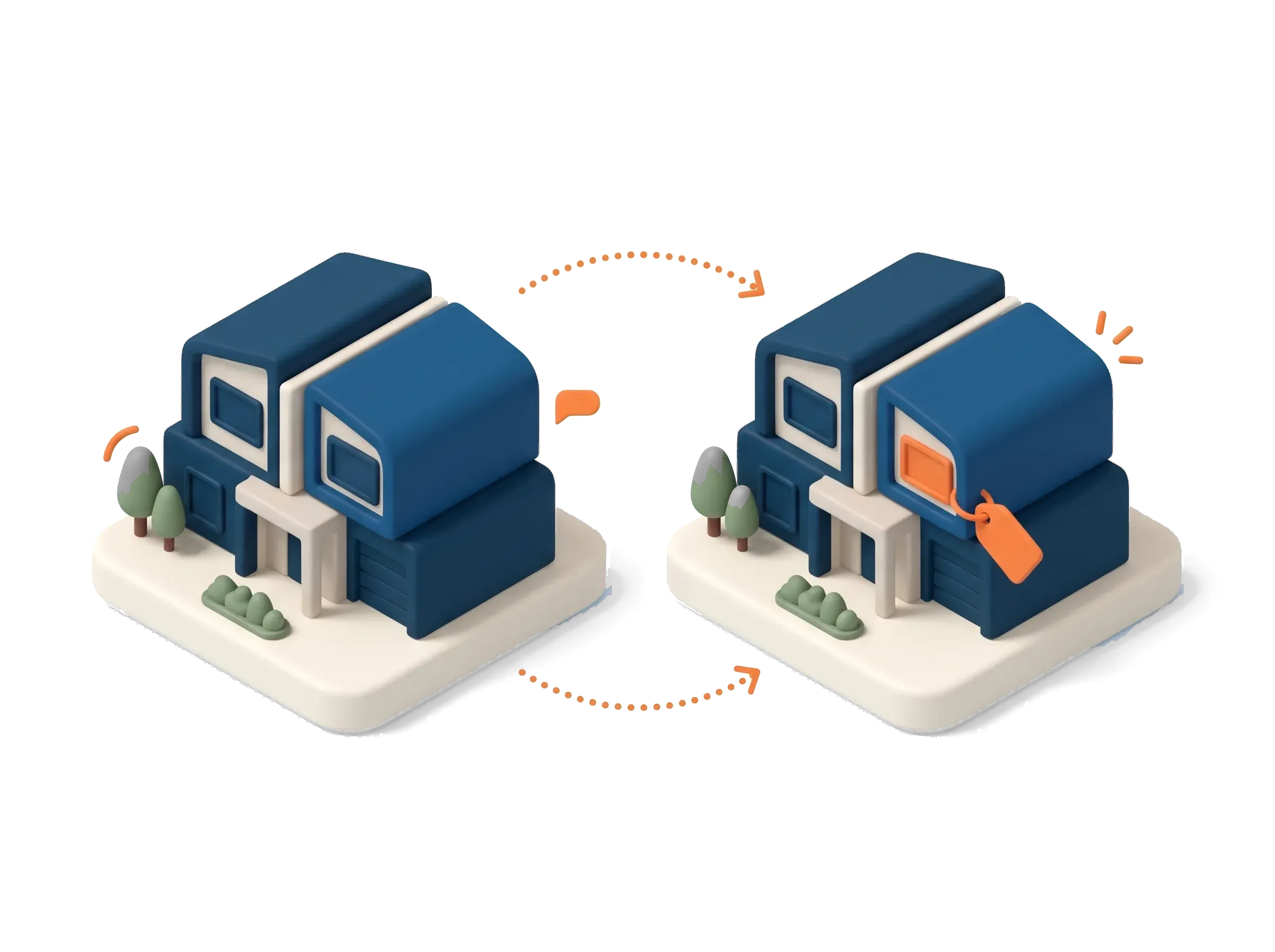
The developer's margin is capital growth you don't wait for.
Picture two brand-new homes, side by side, the same floor plan, the same street, the same market rent. One is bought the usual way, at retail, with the developer's margin baked into the price. That buyer negatively gears it, tops up the mortgage every month, and hopes the market eventually gives them back the margin they just paid out.
The other is retained at what it actually cost to create. Same house, same rent, and the margin never left. Here is the part worth sitting with: that margin behaves exactly like capital growth. It is the gap between what you paid and what the home is worth, which is the definition of growth, and it is sitting there on day one rather than at the end of a decade of hoping.
So the retail buyer and the cost-price buyer are chasing the same number. One is waiting for a market to deliver it. The other manufactured it by helping create the house. That is the whole difference, and it is why we call it manufactured capital growth rather than a discount.
New builds are not overpriced. Retail is. Pay developer cost price and the growth a retail buyer spends ten years waiting for is already on your balance sheet.
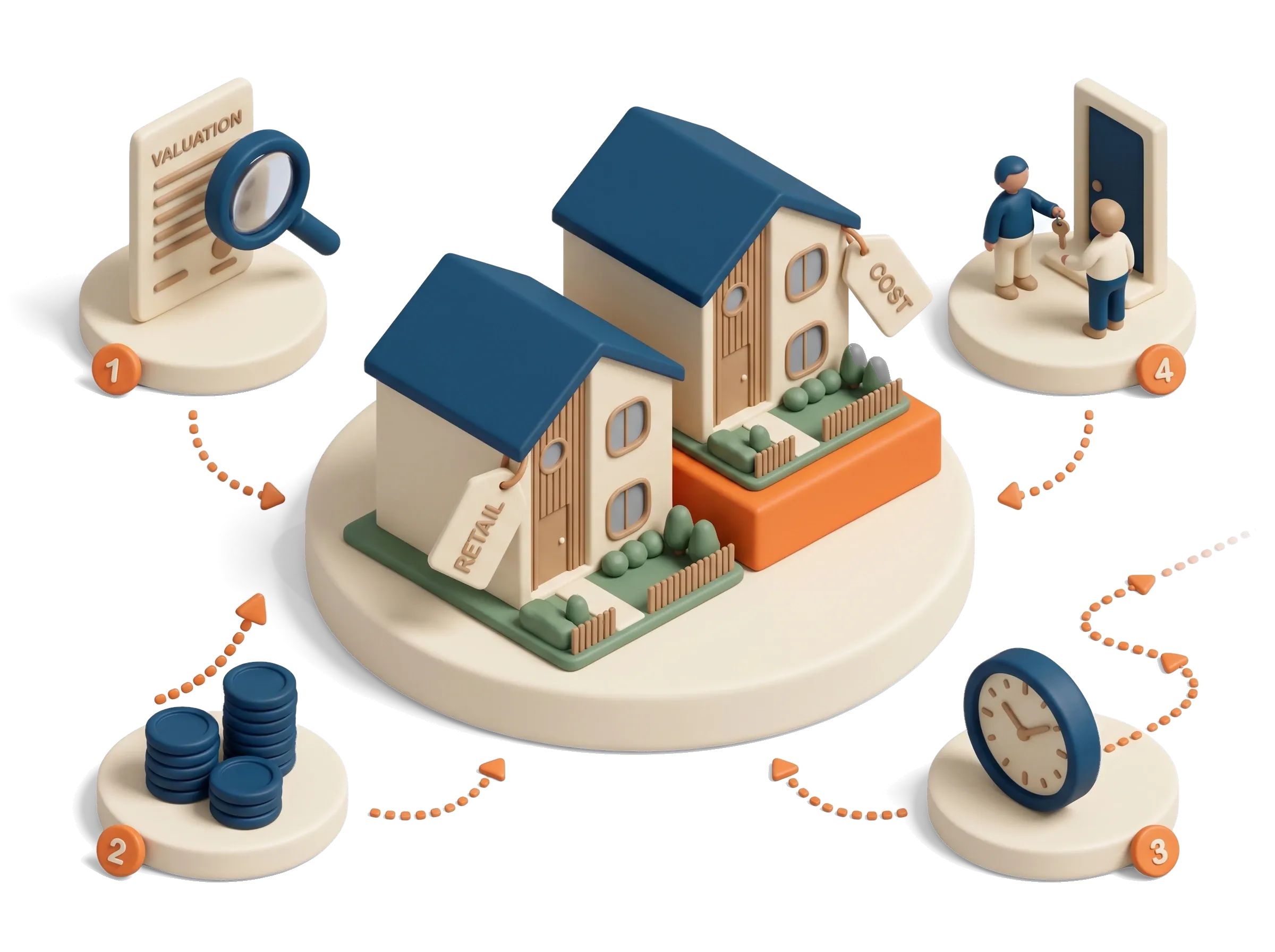
What the margin does once it is yours.
Paying cost instead of retail is a single decision, made once, at the start. Everything below follows from it, and they compound rather than compete.
Manufactured capital growth
A retail buyer needs the market to rise before they are ahead. You are ahead the moment the home exists, because the growth was created by building it. No cycle to time, no decade to sit through.
Instant equity, and a valuer says so
At completion the finished home is valued. The gap between that valuation and what you paid is equity you hold on day one, evidenced by a bank-accepted number rather than an estimate in a brochure.
A rental yield that starts higher
Yield is rent divided by what you paid. Same market rent, lower cost base, stronger yield. On a brand-new build, depreciation then works on top, which for many investors is the difference between topping up a property and holding one that pays its own way.
Your capital, free again
Because the equity is already there, it can do the job a cash deposit normally does. The capital you committed at the start is no longer tied up in the purchase, so it can go into the next project while you keep the house, or simply come back to you at the end.
Same rent, lower cost base, higher rental yield.
Two buyers, the same house, the same tenant paying the same rent. The only variable is what they paid to get in. The illustration shows the mechanism. Figures are round numbers for explanation, not a forecast and not an offer.
Pays $700,000
Earns $42,000 rent
Equity on day one nil
≈ 6.0% gross yield
Retains at $600,000
Earns $42,000 rent
Equity on day one $100,000
≈ 7.0% gross yield
Both buyers own the same house and collect the same rent. One of them also owns $100,000 of equity and a full percentage point of yield, and neither of those came from the market moving. Illustrative only, and not tax advice. Actual figures depend on the project, the market rent and your circumstances.
Keep the house, and get your capital back out.
Instant equity is not only a number on a statement. It is the deposit you never had to save. That is what lets the same capital do more than one job, and it is the reason cost price matters more than the word "discount" suggests.
- 1
Capital goes in
Your capital helps fund the project before it is built. That is the position that earns the cost price rather than the retail price.
- 2
The build creates the growth
At completion the home is worth more than it cost to create. That gap is your manufactured capital growth, and a valuer puts a number on it.
- 3
The equity becomes the deposit
Settling with a loan measured against the completed valuation covers the cost price, so no cash deposit is required. Stamp duty and legals are still paid in cash.
- 4
The capital comes back to you
Your original capital is no longer tied up in the purchase. It can go into the next project, or it can simply come home, while the property stays yours, rented, with the equity in it.
What has to go right
The loop above is arithmetic. Whether it turns is a different question, and these are the things that stop it.
- Serviceability is the real ceiling. Equity does not repay a loan, income does. Every loan needs a lender to agree you can afford it, and that ends most recycling plans long before the equity runs out.
- The valuation has to land. The mechanism rests on the completion valuation. If it comes in short, the loan shrinks and the shortfall is cash out of your pocket.
- Cash still leaves on every cycle. Stamp duty, legals, lenders mortgage insurance at a higher LVR and holding costs are all real money.
- A project can go the other way. Development carries risk. A build that runs over or a market that turns does not produce equity to recycle.
This section is educational. It illustrates a mechanism, and it is not financial, credit or tax advice, not a forecast, and not a plan for your circumstances. Whether any of it is available or sensible for you depends on your income, your lender and your own advisers.
A finished home that settled 21.7% under valuation.
Sapphire Place at Palm Beach on the Gold Coast was five townhouses. One investor retained a home at developer cost price, and the bank valuation at completion is what turned that entry price into equity they could actually use. It came in ahead of the 20% target above.
Manufactured equity on cost
Against a $475,000 bank valuation, and ahead of the 20% benchmark above. Built, not waited for.
Cash-on-cash return
On the seed capital they contributed, over a build that ran about eleven months.
Gross yield on cost
Against about 5.4% had they bought the same home at retail. Same house, same rent, different entry price.
One completed project, and one investor's circumstances. It is history, not a forecast, and no two projects run the same way. The full numbers, including what it cost and what went wrong, are in the Sapphire Place case study.
It made much more sense to pay co-developers cost price for a project rather than retail price.
 Read the reviews
 Want to see a home at developer cost price?
We don't list specific homes or numbers on this website. Join the community, we'll get in touch, understand what you're after, and walk you through a real opportunity personally.
Frequently asked questions
What does "manufacture capital growth" actually mean?
It means the gain is created by building the home rather than waited for from the market. A finished house is worth more than the land, the build and the delivery costs that created it, and that difference is the developer's margin. Retain the home at cost and the margin stays with you. You end up in the same position a retail buyer reaches only after years of market growth, except you got there on completion day and you did not need the market to co-operate.
How is instant equity different from capital growth?
In practical terms it is the same money arriving by a different route. Capital growth is the market lifting the value of what you own. Instant equity is the gap between what you paid and what the finished home is valued at, and it exists the day the valuation is done. Both show up as equity on your balance sheet. One depends on the cycle and takes years, the other depends on the feasibility and takes a settlement.
How does buying at cost boost rental yield?
Yield is rent divided by what you paid. If the rent is the same but your purchase price is lower, the yield is higher. Buying at cost lowers the denominator, so the same market rent produces a stronger return. On a brand-new home, depreciation then works on top of that, which is what moves some properties from negatively geared to paying their own way.
Can I get my original capital back out and still keep the property?
That is the intention of the structure, and it is worth understanding the limits. When you settle with a loan measured against the completed valuation, the built-in equity can do the job a cash deposit normally does, which frees the capital you committed at the start. You can put it into another project or simply take it back. What stops this is serviceability, not equity: every loan needs a lender to agree you can afford it. A short valuation, stamp duty, legals and lending policy are all real, so treat it as a mechanism with a governor on it rather than a loop that runs forever.
Aren't new builds overpriced compared to established homes?
At retail, often yes. A new-build retail price includes the developer's margin, marketing and selling costs, which is why the yield on that price can look thin. Acquiring at developer cost price strips those out, so you are paying for the home, not the sales process. The same new build that looks overpriced at retail can be a strong yield at cost.
Can a property bought at cost price be positive cashflow?
It is far more likely than at retail. A lower cost base lifts the yield, and because these are brand-new homes, depreciation shelters income against tax. Whether any specific property is positive cashflow depends on the rent, the rates and your circumstances. That is general information only, not tax advice, so confirm the numbers with your accountant.
What is "developer cost price"?
It is what it costs to create the finished home, land plus build plus the costs of delivery, before the developer margin that a retail buyer normally pays on top. Acquiring at cost means that margin stays with you as equity.
Is this an offer to invest?
No. This is general information only. Join the community and, if it fits, we extend a private offer to a limited number of eligible investors, after a conversation.
Ready when you are.
Join the community and we will be in touch. Projects are shared privately with members, a few at a time, once we have spoken.
Join the community