

Chapter 08 of 12 in The FracHaus Guide to Property Development

Completion: sell or hold

The fork in the road, and why holding at cost changes the maths.

Every development ends at the same fork. The dwellings are complete, titles have issued, and each one can go down one of two roads: sold to the retail market for a cash profit, or kept as a long-term investment acquired at cost. Neither road is right in general. One of them is usually right for you, and it is worth deciding before the project starts, because tax, structure and finance all hang off the answer.

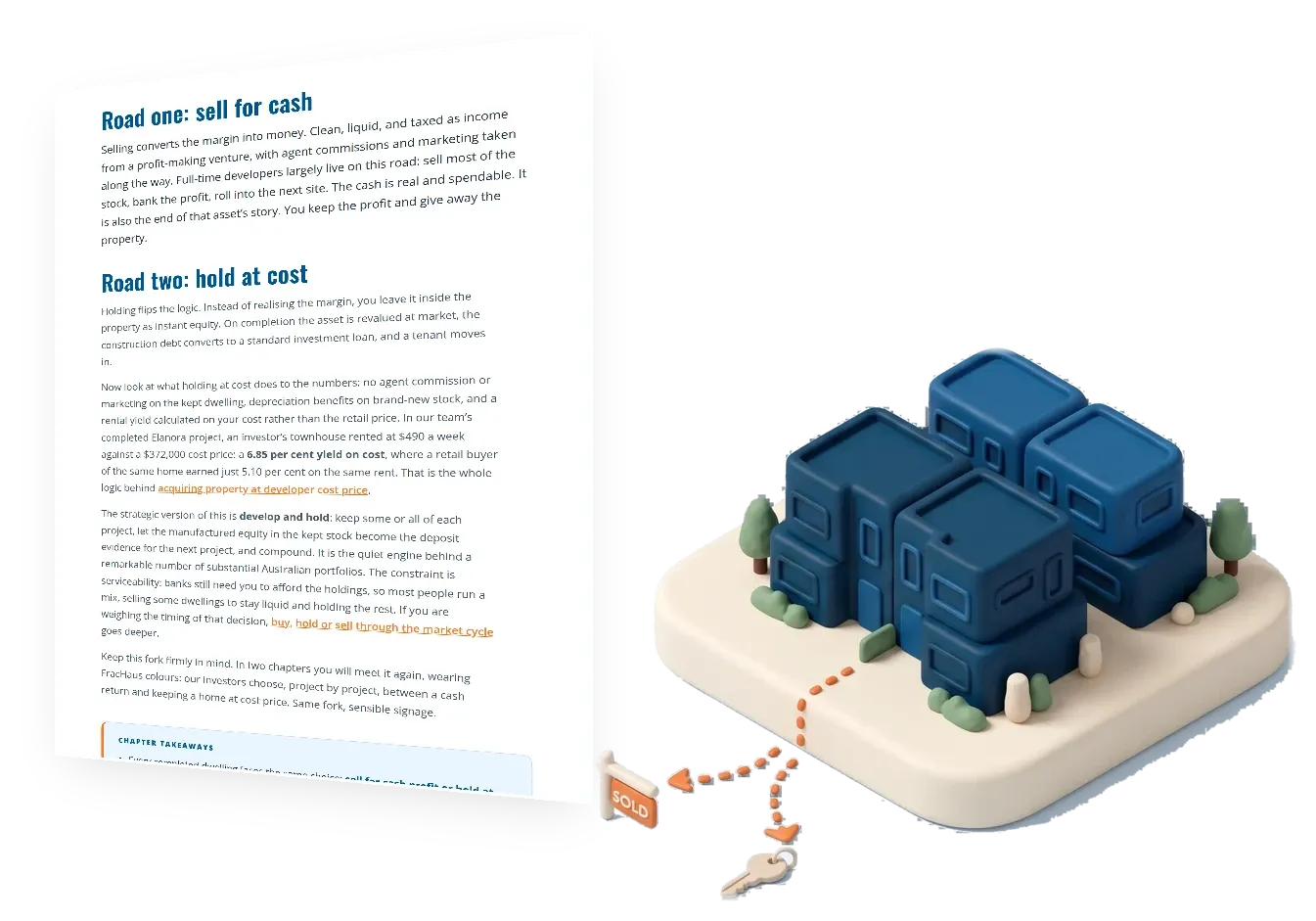
Chapter 8 of the FracHaus property development guide, completion: sell or hold, shown as a page beside its illustration

Road one: sell for cash

Selling converts the margin into money. Clean, liquid, and taxed as income from a profit-making venture, with agent commissions and marketing taken along the way. Full-time developers largely live on this road: sell most of the stock, bank the profit, roll into the next site. The cash is real and spendable. It is also the end of that asset’s story. You keep the profit and give away the property.

Road two: hold at cost

Holding flips the logic. Instead of realising the margin, you leave it inside the property as instant equity. On completion the asset is revalued at market, the construction debt converts to a standard investment loan, and a tenant moves in.

Now look at what holding at cost does to the numbers: no agent commission or marketing on the kept dwelling, depreciation benefits on brand-new stock, and a rental yield calculated on your cost rather than the retail price. In our team’s completed Sapphire Place project at Palm Beach, an investor’s townhouse rented at $490 a week against a $372,000 cost price: a 6.85 per cent yield on cost, where a retail buyer of the same home earned just 5.10 per cent on the same rent. That is the whole logic behind acquiring property at developer cost price.

The strategic version of this is develop and hold: keep some or all of each project, let the manufactured equity in the kept stock become the deposit evidence for the next project, and compound. It is the quiet engine behind a remarkable number of substantial Australian portfolios. The constraint is serviceability: banks still need you to afford the holdings, so most people run a mix, selling some dwellings to stay liquid and holding the rest. If you are weighing the timing of that decision, buy, hold or sell through the market cycle goes deeper.

Keep this fork firmly in mind. In two chapters you will meet it again, wearing FracHaus colours: our investors choose, project by project, between a cash return and keeping a home at cost price. Same fork, sensible signage.

Questions people ask about this

Should you sell or hold a completed development?

Neither is right in general and one is usually right for you. Selling converts the margin into liquid cash, taxed as income from a profit-making venture, with agent commissions and marketing along the way. Holding leaves the margin inside the property as instant equity, avoids the selling costs on the kept dwelling, and produces a rental yield calculated on your cost rather than the retail price. Decide before the project starts, because tax, structure and finance all hang off the answer.

What is yield on cost?

Yield on cost is the annual rent divided by what the property cost you, rather than what it is worth. In our team's completed Sapphire Place project at Palm Beach an investor's townhouse rented at $490 a week against a $372,000 cost price, a 6.85 per cent yield on cost, where a retail buyer of the same home earned 5.10 per cent on the same rent.

What is the develop and hold strategy?

Develop and hold means keeping some or all of each completed project rather than selling it. The manufactured equity in the kept stock becomes the deposit evidence for the next project, and the portfolio compounds. The constraint is serviceability: lenders still need you to afford the holdings, so most people run a mix, selling some dwellings to stay liquid and holding the rest.

Your next step

Cash return, or a home at cost price?

With FracHaus you will eventually choose exactly this, project by project. The community is where the choosing starts.

Join the community