

Chapter 07 of 12 in The FracHaus Guide to Property Development

Construction and delivery

Builders, contracts, variations, and holding the line on cost.

Fourteen months of research, approvals and finance, and finally something a drone can film. Construction is the stage everyone associates with development, and in fairness it is where most of the money is spent. It is also where the margin you carefully protected in the feasibility gets defended one document at a time.

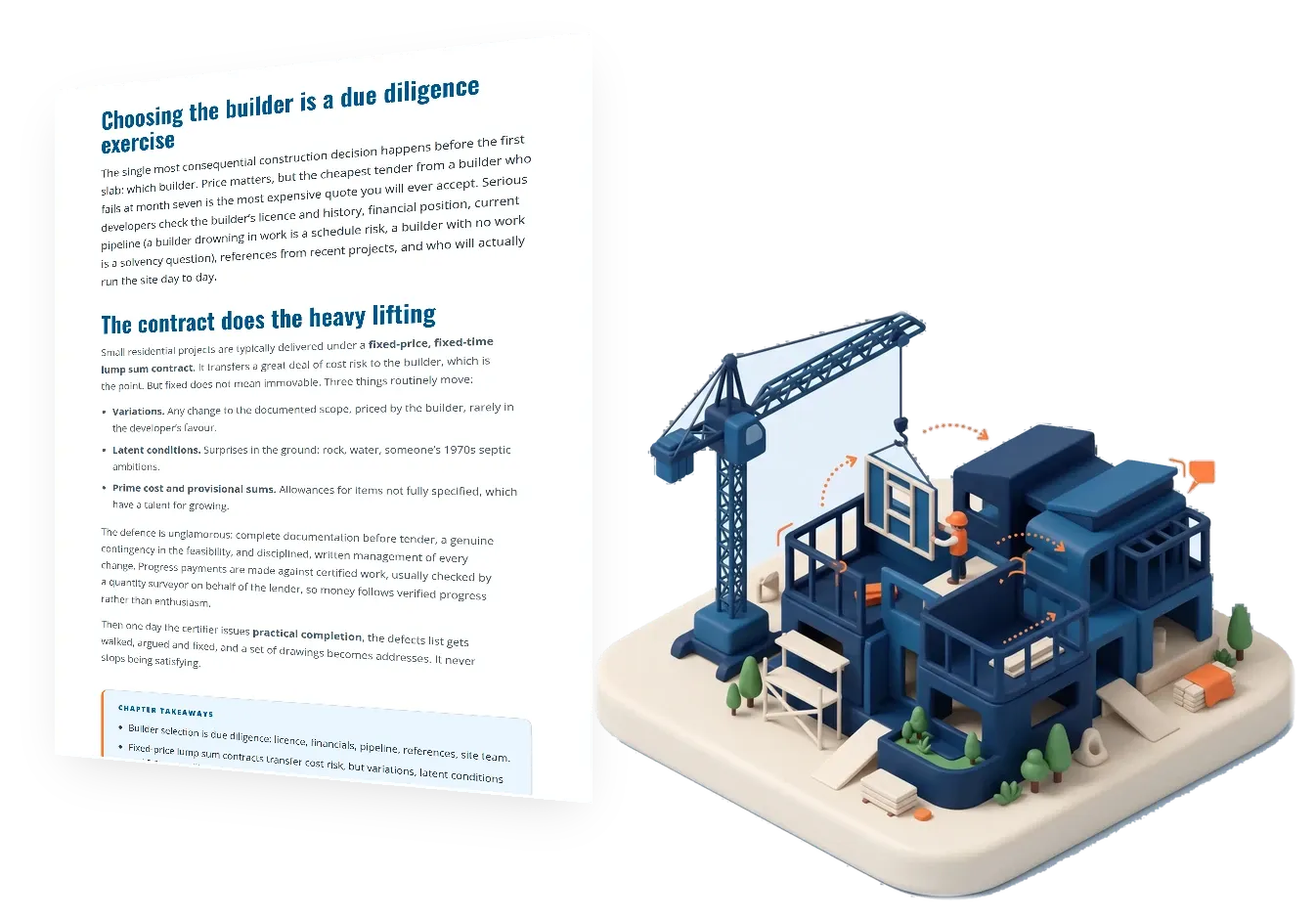
Chapter 7 of the FracHaus property development guide, construction and delivery, shown as a page beside its illustration

Choosing the builder is a due diligence exercise

The single most consequential construction decision happens before the first slab: which builder. Price matters, but the cheapest tender from a builder who fails at month seven is the most expensive quote you will ever accept. Serious developers check the builder’s licence and history, financial position, current pipeline (a builder drowning in work is a schedule risk, a builder with no work is a solvency question), references from recent projects, and who will actually run the site day to day.

The contract does the heavy lifting

Small residential projects are typically delivered under a fixed-price, fixed-time lump sum contract. It transfers a great deal of cost risk to the builder, which is the point. But fixed does not mean immovable. Three things routinely move:

  • Variations. Any change to the documented scope, priced by the builder, rarely in the developer’s favour.
  • Latent conditions. Surprises in the ground: rock, water, someone’s 1970s septic ambitions.
  • Prime cost and provisional sums. Allowances for items not fully specified, which have a talent for growing.

The defence is unglamorous: complete documentation before tender, a genuine contingency in the feasibility, and disciplined, written management of every change. Progress payments are made against certified work, usually checked by a quantity surveyor on behalf of the lender, so money follows verified progress rather than enthusiasm.

Then one day the certifier issues practical completion, the defects list gets walked, argued and fixed, and a set of drawings becomes addresses. It never stops being satisfying.

Questions people ask about this

What does a fixed price building contract actually fix?

A fixed-price, fixed-time lump sum contract fixes the price for the scope as documented, and transfers a great deal of cost risk to the builder. It does not make the number immovable. Variations to the documented scope, latent conditions in the ground, and prime cost or provisional sum allowances can all still move the final figure.

What are latent conditions in construction?

Latent conditions are physical conditions on the site that could not reasonably have been foreseen, and that appear once work starts. Rock, water, contamination, or the remains of previous structures and services. They are one of the three routine reasons a fixed-price contract sum moves.

How do developers stop construction costs blowing out?

Complete documentation before tender, so the builder is pricing a finished design rather than an intention. A genuine contingency inside the feasibility. Disciplined, written management of every change. And progress payments made only against work certified by a quantity surveyor on behalf of the lender, so money follows verified progress rather than enthusiasm.

Your next step

Rather read the progress reports than chase the variations?

Our investors receive project updates while Peter argues with the paperwork. Join the community and keep it that way.

Join the community